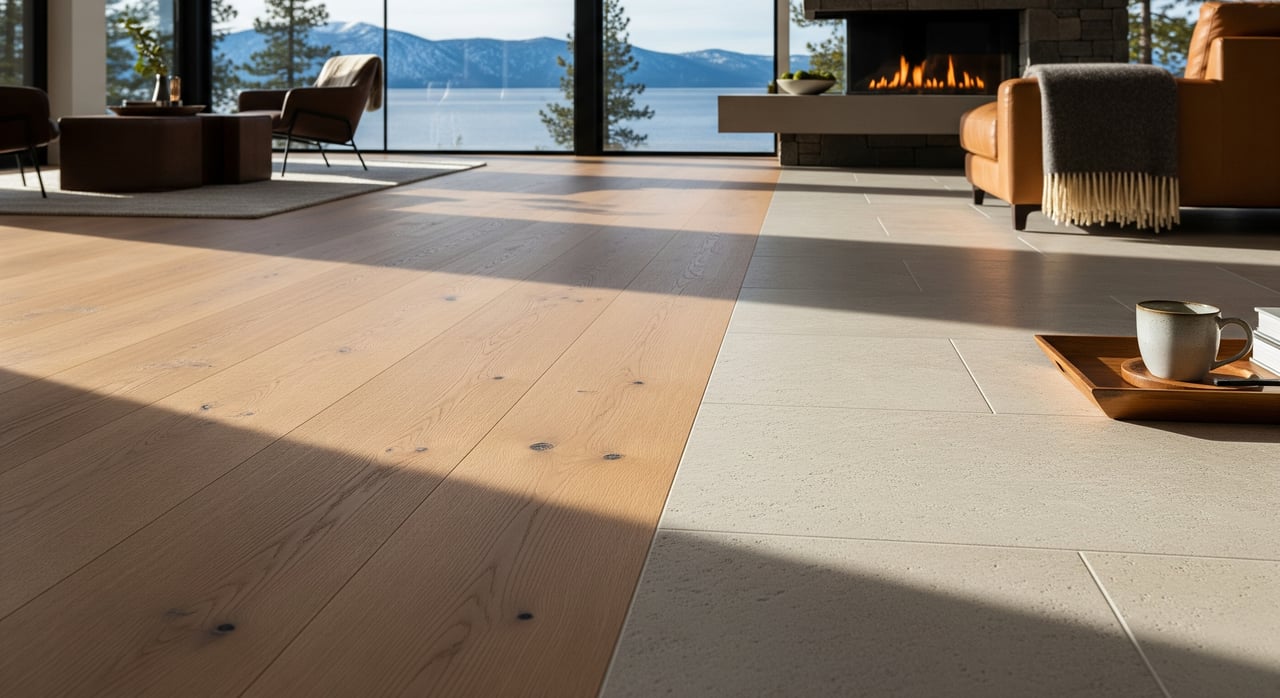
Cold tile in the morning, snow piling up outside, and a home that never quite feels warm enough can take the shine off mountain living. If you own or plan to buy a home in Tahoe City, you want comfort that matches the setting. Radiant floor heating is a favorite in luxury mountain homes because it delivers even warmth where you feel it most. In this primer, you’ll learn how radiant works, why it fits our climate, what to consider for retrofits and new construction, energy and incentive basics, and how it can influence resale. Let’s dive in.
How radiant floor heat works
Radiant floor heating warms people and room surfaces by gently heating the floor, not by blowing hot air. Heat moves from the floor into the space, creating an even, calm environment.
Hydronic systems at a glance
Hydronic radiant uses warm water that circulates through flexible PEX tubing embedded in or under the floor. A manifold distributes water to zones, and mixing valves keep temperatures appropriate for the floor finish. The heat source can be a boiler, an air‑source heat pump, or a ground‑source heat pump.
Electric radiant basics
Electric radiant uses mats or cables that convert electricity to heat. It is simple and thin, which makes it popular for small areas like bathrooms or for targeted remodels. Whole‑home electric radiant is less common due to operating cost in many cases.
Key components that matter
- Heat source: boiler, electric boiler, or heat pump.
- PEX tubing for durability and flexibility.
- Manifolds, pumps or zone valves, and smart controls for zoning and comfort.
- Insulation below the slab or subfloor to reduce heat loss.
- Thermal mass like concrete or a topping slab to smooth output and hold warmth.
What it feels like day to day
Radiant floors provide even temperatures with fewer drafts and less temperature layering from floor to ceiling. These systems respond more slowly than forced air because of the floor’s thermal mass, so they work best with steady settings and well‑planned zones.
Why it shines in Tahoe City
Comfort in long winters
Snowy, extended winters make warm floors a real quality‑of‑life upgrade. You can often feel comfortable at slightly lower air temperatures because the surfaces around you are warm. This steady comfort is ideal when you spend long stretches at the home during ski season.
Reliability and backup planning
High‑end mountain homes often include redundant heating strategies. Hydronic radiant pairs well with backup options like a secondary boiler, an electric element, or a hybrid setup that uses a heat pump as the primary source with a boiler for peak cold. That balance helps keep interiors safe during extreme weather.
Snowmelt for exterior areas
Hydronic or electric snowmelt loops can be placed in driveways, steps, and entries to limit snow and ice buildup. Proper design includes slope and drainage, freeze protection like glycol, and protected manifolds. The result is reduced shoveling, lower slip risk, and less wear on exterior surfaces.
Make the envelope work for you
Radiant performs best when the home is well insulated and airtight. In Tahoe City, attention to window performance, air sealing, and slab or edge insulation significantly improves comfort and efficiency. If heat is spilling out through gaps or weak windows, any system will work harder.
New build vs. retrofit
Best‑case in new construction
When you plan radiant from the start, the team can optimize slab thickness, under‑slab and perimeter insulation, tube spacing, and manifold locations. You also have more flexibility to choose a heat source and plan floor finishes that transfer heat well, like stone, tile, or polished concrete.
Remodel pathways
If you are retrofitting, you have options that vary in complexity and height build‑up:
- Thin overlay or topping slab over an existing subfloor. This improves performance but adds weight and height, which requires structural review.
- Low‑profile “dry” systems with prefabricated panels or aluminum plates. These limit height increase and speed installation, though output can be lower than full‑slab systems.
- Slab‑on‑grade retrofits that involve new tubing and a new slab or a topping slab. These are more invasive and typically more costly.
Plan for transitions to adjacent rooms, door and stair heights, and how the new floor build impacts cabinetry, baseboards, and millwork.
Floor finishes and heat transfer
Flooring with low thermal resistance delivers better performance. Tile, stone, and concrete transfer heat efficiently. Thick carpeting and cushioned pads slow heat flow and may require higher water temperatures or tighter tube spacing in those zones.
Zoning and intuitive controls
Create zones that reflect how you use the home. Bedrooms, great rooms, and spa baths often benefit from separate thermostats and manifold actuators. Smart controls make it easy to adjust temperatures remotely, which is valuable for second‑home owners.
Permits, structure, and moisture
Expect permits and inspections. In Placer County and Tahoe Basin jurisdictions, you will likely see requirements for insulation details, backflow protection, and proper venting or electrical standards. Verify structural capacity before adding heavy topping slabs, and plan moisture management carefully, especially over wood subfloors.
Energy sources and operating costs
Heat pump, boiler, or hybrid
Hydronic radiant thrives with low supply temperatures, which align well with air‑source or ground‑source heat pumps. Cold‑climate models can reduce energy use compared to fossil‑fuel boilers in many scenarios. Gas or propane boilers remain common for fast recovery and high‑temperature supply. Many luxury homes use a hybrid approach that blends efficiency and backup strength.
Right‑sizing and modeling
Accurate heat‑load calculations are essential. A Manual J‑style calculation helps size the heat source and guides tube spacing, water temperatures, and zone setup. Over‑sizing can cause short cycling and inefficiency, while undersizing leaves rooms cold on the worst winter days.
What drives your bill
Your monthly cost is shaped by energy rates, the home’s envelope, and how you operate zones and thermostats. In mountain climates, improving airtightness and upgrading windows and insulation usually produces larger savings than changing the distribution method alone.
Incentives and code landscape
Federal and California incentives may be available for heat pumps and energy efficiency improvements. Availability changes, so verify current programs with the California Energy Commission, your utility provider, and a local HVAC contractor. Title 24 energy requirements can also influence equipment choices in new construction.
Maintenance and lifespan
PEX tubing is long‑lived when installed correctly. Pumps, expansion tanks, and mixing valves need periodic service. Boilers and heat pumps have manufacturer maintenance schedules and expected service lifespans. Keep detailed records and as‑built documentation for smoother ownership and future resale.
Resale insights for luxury buyers and sellers
What buyers notice
In Tahoe City’s luxury segment, buyers value comfort, quiet operation, and systems that support year‑round living. Radiant floors are typically seen as a premium feature. Efficient options like heat pumps and well‑executed zoning can further strengthen the property’s appeal.
Marketing and documentation prep
Sellers should gather system paperwork before listing. Include as‑built tubing and manifold diagrams, heat‑source specifications, control manuals, service records, and any warranties. Clear documentation builds buyer confidence and reduces due diligence friction.
Questions to anticipate
Expect questions about serviceability and maintenance costs, impacts of retrofit height changes, and how the system could integrate with future electrification goals. If a snowmelt system is present, be prepared to discuss operating practices, glycol, and controls.
Design and contractor coordination
Build your team early
For the best result, coordinate early among your architect, structural engineer, mechanical designer or radiant specialist, flooring subcontractor, and general contractor. Define slab and edge insulation, screed details, and reinforcing early in the plans.
Controls for second‑home living
Select controls that are intuitive and remote‑friendly. Smart thermostats, clear zone labeling, and straightforward scheduling make it easy to pre‑heat before arrival and manage setpoints while away to reduce energy use.
Exterior snowmelt detailing
Treat snowmelt as its own system. Design for slope and drainage, protect manifolds from weather, and include freeze protection. Choose exterior finishes that work with embedded tubing or cables and can withstand Tahoe winters.
Commissioning and handover
Require pressure testing of tubing and documented as‑built layouts. Commission the system before move‑in, including setpoints and sequence checks. Provide an owner’s manual, maintenance plan, and contacts for service.
Is radiant right for your Tahoe home?
If you want quiet, even comfort and warm floors through long winter months, radiant heating is worth serious consideration in Tahoe City. It performs best with a strong building envelope, thoughtful zoning, and a right‑sized, efficient heat source. Whether you are planning a ground‑up build or a remodel, early coordination and clear documentation will pay off in everyday comfort and eventual resale.
If you would like tailored guidance for your property or upcoming purchase in Tahoe City or around the lake, connect with Harmony Steingrebe for a private, concierge‑level consultation.
FAQs
What is the difference between hydronic and electric radiant?
- Hydronic uses warm water through PEX tubing and suits whole‑home systems, while electric uses mats or cables and is often best for small areas like bathrooms or targeted remodels.
Is radiant floor heating more efficient than forced air in Tahoe City?
- It can be more comfortable and may allow lower air setpoints, but total efficiency depends on your heat source, insulation, airtightness, and control strategy rather than the distribution method alone.
Can I add radiant during a remodel without raising floor height too much?
- Low‑profile dry systems can minimize height gain, but they may not match the output of a full slab or topping slab, so plan zones and finishes carefully.
Which heat source pairs best with hydronic radiant in cold climates?
- Cold‑climate air‑source or ground‑source heat pumps can be efficient choices, and many homes use hybrids with a boiler for backup or extreme cold conditions.
What flooring works best over radiant heat?
- Stone, tile, and concrete transfer heat efficiently, while thick carpets and cushioned pads reduce output and may require design adjustments to maintain comfort.
What should sellers prepare to help buyers evaluate a radiant system?
- Provide as‑built tubing and manifold layouts, equipment specs, control manuals, and service records, plus documentation for any snowmelt system and glycol used.